Showing posts with label Bohol. Show all posts

December 31, 2012

Travel Bites: Bohol has got it all

(The tarsier is the smallest primate in the world and on the endangered species list. These are nocturnal creatures and are easily stressed by loud noises and sudden movements.)

IT’S probably unfair to compare Bohol to the largest shopping-mall brand in the country, as the province is certainly far from being commercial. 

But there is probably no other province in the Philippines other than Bohol that has a surfeit number of tourist sites and activities to choose from. 

The culture and heritage enthusiast can count on old Spanish-era churches to admire. 

The environmentalist can check on the cute furry tarsiers endemic to the island and swim with whale sharks and dolphins in its cool, clear waters. 

The beach bum has a wide stretch of white sand on which to tan himself. 

Those inclined to music can listen to a popular children’s choir, while house tunes are all the rage in nighttime entertainment spots. 

And yet, Bohol still manages to keep its trademark quaint laid-back calm, such that tourists in need of solitude and sanctuary still have quite a number of places to call their own. 


Must-See’s 

Historical churches. According to Visita Iglesia Bohol: A Guide to Historic Churches, by Regalado Trota José, there are more than 40 churches, many of them standing since the Spanish era in the Philippines. 

Most popular among the tourists due to their accessibility and inclusions in most day tours are the Baclayon and Loboc churches. 

The Baclayon Church (Church of Our Lady of the Immaculate Conception) is one of the oldest built from stone, and most-preserved, Jesuit-founded churches in the country. 


(The Church of the Imaculate Conception in Baclayon is one of the oldest built from stone, and most preserved, Jesuit-founded churches in the country. It features a huge fortress-like bell tower to its right, an adjacent convent, and a museum housing antique saint images and religious paraphernalia.)

The exuberance of floral decorations in the retablos surrounding the altar of the church is a very Filipino interpretation of the baroque design. Baclayon Church has an adjacent convent and also houses a collection of antique saint images and religious paraphernalia in a museum. 

Completed in 1734, the Loboc Church (The Church of San Pedro) is unique because behind its stone façade is another stone façade, yellowing with age but ornately decorated with the faces of saints. 

The interior features a large bamboo organ, which looms above the heads of parishioners sitting at the back of the church. Cebuano painter Canuto Avila painted the ceiling with various images of the Virgin Mary carrying her different names. 

The Loboc Church also features an extensive collection of religious pieces, including saints, colorful and intricately designed dresses of the Virgin Mary, chests and missal stands. 

Other old churches worth visiting are Church of Our Lady of Light in Loon; Church of Our Lady of the Assumption in Dauis, Panglao Island; Maribojoc Church in Maribojoc; and Saint Agustine Church on Panglao Island. 

Tarsier watch. You can’t claim to have visited Bohol, unless you’ve seen the tarsier. Considered the smallest primate in the world and on the endangered species list, these sleepy furry creatures are found at the 134-hectare wildlife sanctuary operated by the Philippine Tarsier Foundation Inc. in Corella, about 30 minutes away from Tagbilaran. 

The hills are alive. Long a hallmark of many Philippine postcards, these enormous “Chocolate Kisses” are still a wondrous sight to behold. The sweeping vista before you can be viewed from many angles at the nearby lookout point. 

The best time to visit the Chocolate Hills is in the summer when the grass that grows on them turns brown. The rest of the year the hills are a lush green and are still quite a breathtaking sight. 


(Over 1,200 dome-shaped hills dot the municipality of Carmen, comprising what is known as Chocolate Hills. During the dry season, the grass on these limestone formations turn brown, thus its name. The rest of the year, the hills are a lush green but are still breathtaking to behold.)

Other points of interest in Bohol are the man-made Mahogany Forest and the Simply Butterflies Conservation Center in Bilar. 

If you don’t want the hassle of commuting to these tourist spots, or joining other people in group tours, hire your own private car for 24 hours, which costs about P2,000 (excluding gas). Call ERB Rent-a-car (0949-6547654/0915-6590705). 

To-Do’s 

Water world. Named after the sexy starlet of the 1970s, Alona Alegre, the white-sand Alona Beach is a haven for scuba divers and snorkelers because of the extensive coral reef just off the shore. (Balicasag and Pamilacan Islands are other popular dive spots, as well.) A list of dive operators and schools can be found at http://www.scubadivingbohol.com/. 

Most tourists grab a beer from one of the many bars along the way, plunk themselves on the sand and drink ‘til sunset, or get a massage, while tanning themselves under the sun. 

A great way to explore the surrounding waters of Bohol is to go a on a whale-, whale-shark- or dolphin-watching tour. Most of these guided tours take off from the Baclayon Pier, and will take guests to Pamilacan Island whose waters teem with these creatures. Expert tour guides with excellent spotters are plentiful in Tagbilaran and Panglao Island. (Check out http://www.boholtravelguide.com/dir/tour_op/index.shtml for a list of tour operators in the province.) 

Take the plunge. In the last two years, the municipality of Danao has been attracting extreme-adventure tourists. Its adventure park offers tourists the thrill of plunging in a free-fall canyon swing, the exhilaration of crossing the Wahig River in what is reputed to be the longest and highest zipline in the country (“Suislide”), and opens up a new interesting world of stalactite formations on spelunking trips.

More information on the heart-thumping activities in Danao at http://www.eatdanao.com. 

Listen to angels. Tourists are welcome to watch the internationally renowned Loboc Children’s Choir rehearse after school, from Monday to Friday. The choir—comprised of boys and girls studying at the Loboc Central Elementary School with ages ranging from five to 13—was founded in 1980, wowing audiences in the US, Europe and Asia. They have won local and international awards and even bested the more famous Vienna Boys Choir in a competition in Barcleona in 2003. Their angelic voices soothe the soul after a weary day of touring. 


(The seaside view from the Lantaw restaurant at the Bohol Bee Farm.)

Where to stay: In Tagbilaran, the MetroCentre Hotel & Convention Center along C.P.G. Avenue offers travelers comfortable accommodations at reasonable rates. Though the hotel is a bit dated, the service is impeccable with the staff always ready to meet the needs of its guests. It has limited choices for breakfast, but has free Wi-Fi connection (a must these days for most travelers), and is just a hop away from a 24/7 supermarket. 

On the ground floor of the hotel is the Club Sphere, which pulsates to house music, making it a perfect place for nighttime revelers to dance their cares away. Adjacent to this is the Atmo Bar where guests can play billiards or shoot darts. There are rooms available as well for those serious with their singing.

Bohol Bee Farm and Resort on Panglao Island offers a different kind of tropical vibe for tourists with an organic food and environmental bent. Its rooms are spacious with some providing an amazing view of the sea. Guests will enjoy the resort’s seclusion (a short tricyle ride away from Alona Beach) as well as its unique dishes made with fresh ingredients. 

The staff are all so helpful with guests’ requirements. The resort also arranges tours to various favored destinations within the province. Highly recommended is the mesmerizing Firefly Tour along Loboc River. 

Getting there: All major Philippine carriers—Philippine Airlines, Cebu Pacific, Air Philippines and Zest Airways—fly a number of times daily from Manila to Tagbilaran City (Bohol’s capital), while Mid-Sea Express flies three times a week from Cebu City and Davao to Tagbilaran. 

Bohol is also accessible by fast and regular ferry services from Cebu City, Dumaguete, Siquijor and Dapitan, Zamboanga del Norte via SuperCat, Ocean Jet, Weesam Express, Kinswell Shipping, Starcraft and SeaJet. (For transportation particulars and other information on Bohol, click on http://www.bohol.ph/article107.html.)

(Travel Bites is published every Monday in the front page of the BusinessMirror. This feature on Bohol was published on Nov. 19, 2012. Photos from the web.)

March 27, 2012

My favorite destinations in the Philippines

THE cool, powdery-white sands of Boracay.

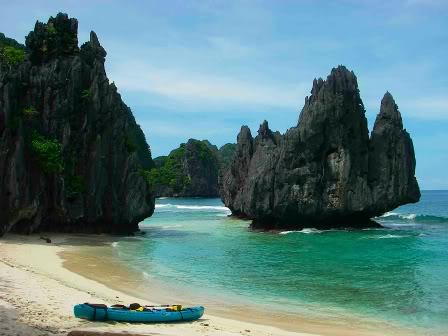
The massive limestone cliffs in El Nido.

The clear, blue waters of Cebu.

The lush, rolling hills of Batanes.

The almost-perfect cone of majestic Mayon Volcano.

These are just some of the awe-inspiring sites to behold when traveling around the Philippines.

I’ve been fortunate to have traveled to quite a number of lovely places in the country primarily because of my profession, and due to a brief stint in the government in the early '90s, accompanying three successive Cabinet secretaries who frequently monitored their agency’s provincial projects.

Nothing compares to the beauty of the Philippines, simply because it offers a myriad of choices to travelers of all persuasions and budgets. And whether you’re a fellow Filipino or a foreigner, one can be sure of friendly locals at these tourist destinations, eager to help and ensure you have a great time.

Here are some of my favorite places in the country:

Albay

Mayon Volcano as seen from the Cagsawa Ruins.

THE still-active Mayon Volcano is one of the most moving and powerful sights I’ve ever been fortunate to behold in my life. Its near-perfect cone is simply breathtaking.

Aside from trekking to the volcano, you can also take an all-terrain vehicle straight up to the lava front. Other sites to visit are the Our Lady of the Gate Parish Church in Daraga that was built in the 18th century, the Cagsawa Ruins, Busay Falls, and Liñgon Hills where an underground tunnel built by the Japanese forces can be found.

Of course, the best part about visiting Albay is eating spicy Bicolano dishes, such as Bicol Express, a variety of meats and fishes cooked with coconut milk, and my favorite dried fish called New Look.

Where to stay: Hotel Venezia (www.hotelvenezia.com.ph) if you’re staying in Legazpi City and want comfortable, clean and value-for-money accommodations. For a luxury feel, check out Misibis Bay Resort in Cagraray Island (www.misibisbay.com).

Batanes

A traditional Ivatan stone house in Basco, Batanes.

SOME foreigners have compared Batanes to Scotland because of its wide-open spaces, lush greenery and deep-plunging cliffs.

Take a trip to “Marlboro Country”—a rolling hill with horses and cows roaming around or feeding on the grass. Visit colorful old churches, such as the Basco Cathedral built in 1783, the Mahatao Church (1787), San Jose Church (1814), etc. And if you can take a seasickness-inducing boat ride to Sabtang (one of three major inhabited islands of Batanes), drop by Savidug, a village of traditional limestone houses still used by the locals (or Ivatans).

Where to stay: Batanes Resort is a 10-minute ride from the capital, and sits on a hill overlooking the sea. Built to resemble the Ivatan houses, the establishment is clean and inexpensive, with basic amenities, such as hot and cold water. They also serve local Ivatan cuisine where I got my first taste of fried flying fish—delish! (For inquiries and reservations, call 927-2393, 0927-5829078.)

Bohol

The tarsier is one of the more popular tourist attractions in Bohol. (Photo by www.nocturnal-animals.com/.)

ASIDE from the world-famous Chocolate Hills, the must-see places in Bohol are the 18th-century churches, such as the baroque-inspired Baclayon Church and Loboc Church, which has an extensive collection of images of various and other religious paraphernalia.

Have a hearty lunch of Boholano dishes while cruising down Loboc River, then visit the smallest primate in the world, the tarsier, in several of the minizoos located along the river.

Other activities include swimming on Alona beach, scuba-diving on Balicasag Island, and dolphin-watching on Pamilican Island.

I was recently told that my favorite resort no longer offers the best customer experience so better click www.bohol.ph/resorts.php for a list of accommodations.

Boracay Island, Aklan

Boracay - the all-time best beach in the country and one of the most popular in the world.

NO doubt the long stretch of white-sand beach and its clear turquoise waters are still the major reasons people continue to flock to Boracay.

Aside from the usual island tours, spa massages, food tripping and bar hopping, and banana-boat rides, there is an amazing number of fun activities that can also be pursued. There’s rolling down a hill in a zorb (www.facebook.com/zorbboracay), feeding the fish while helmet diving, and para-sailing, to name a few.

Visitors have a choice of resorts featuring the barest minimum amenities to the most luxurious, while foodies will surely enjoy an array of local and international cuisine cooked with the most authentic ingredients.

Where to stay: Discovery Shores in Station 1, if you want the best luxury accommodations with the friendliest staff to boot (www.discoveryshoresboracay.com); and Sun Villa in Station 2, for a quiet escape, the best value spa, and home-cooked cuisine (www.boracaysunresorts.com.ph/villa.htm).

Cebu

Visit the Taoist Temple in Cebu City, and make your petitions to the gods.

I HAVE loved Cebu since I started going there in the 1980s. One can be sure of warm, friendly smiles, an inexpensive but belly-busting meal, and just great entertainment because after all, isn’t this the land of country’s best singers? And, of course, the tasty, herb-filled Cebu lechon is simply one of the best-tasting in the country.

Some of the most interesting sites are the Shrine of Magellan’s Cross which was planted by the Portuguese explorer Ferdinand Magellan’s men upon his arrival in Cebu in 1521; the Basilica Minore del Sto. Niño where the oldest image of the Christ Child is enshrined; and the Taoist Temple, which is guarded by fierce dragons and where the local Chinese go to pray and seek favors from ancestors and ancient gods.

Also take a trip to Carcar, which is less than an hour drive from the city, which is famous for its chicharon, leather sandals, Spanish-era and American-period houses, and the historic St. Catherine’s Church, which is the second-oldest church in Cebu, after the Basilica Minore del Sto. Niño.

Where to stay: BE Resort in Mactan for its hip, cool interiors, beach and tasty restaurant dishes (www.beresorts.com); Islands Stay Hotel in Cebu City for a value-chic stay (www.islandsstay.com) accessible to major malls, offices and tourist sites in the city.

Davao

Dr. Bo Puentespina's 'bird talk' at the Malagos Garden Resort's interactive bird show. (Photo courtesy Malagos Garden Resort.)

DAVAO’S marketing slogan “From islands to highlands” says it all.

You will need boundless energy and at least a week to enjoy all the pleasurable offerings of this region.

Climb Mount Apo and catch the sun breaking through the clouds; visit the mighty but endangered Philippine eagle at the Philippine Eagle Center; watch an entertaining interactive bird show at the Malagos Garden Resort; see the creepy bat cave on Samal island; or go ziplining in what is reputed to be Asia’s longest, which is definitely not for the faint-hearted.

Eating durian can be a challenge to first-time visitors—it tastes like heaven but smells like hell, goes a local saying—so if the smell is off-putting, you can try its other variants like candies, coffee (at the homegrown Blu Gre café), or ice cream (Donnabelle brand). Other than durian, pomelo and mangosteen are also plentiful and readily available in the market, supermarkets, and roadside fruit stands.

One of the remarkable food finds in Davao is the artisanal goat cheeses under the brand of Malagos Farms which are comparable in texture and taste to the foreign brands.

Where to stay: Marco Polo Hotel (www.marcopolohotels.com) is still the finest hotel in the city with its large comfortable rooms, and possibly the best Chinese restaurant in the area.

Palawan

Massive limestone cliffs dot the clear torquoise waters of El Nido, Palawan. (Photo from www.e-philippines.com.ph.)

ONE of my most memorable trips has got to be in El Nido, in northern Palawan.

Take a pump-boat ride and marvel at the colossal limestone cliffs or swim in the clean waters of Bacuit Bay where you can see schools of colorful fishes and other marine life. Or why not stop by a sandbar and enjoy the cold powder-fine, white sand under your feet?

Where to stay: Miniloc Island Resort (www.elnidoresorts.com) is in itself a tourist attraction, with its lush surroundings and water cottages built on stilts.

A must-see in Palawan is the Puerto Princesa Underground River, which has been gaining a massive amount of publicity since it was named one of the New Seven Wonders of Nature. The main attraction is the St. Paul’s underground cave where stalactites and stalagmites have formed over the years.

Where to stay: Hotel Fleuris in Puerto Princesa (www.fleuris.com) loves hosting groups—whether families or friends, so make sure you avail yourself of its barkada package.

By no means is this list complete. There are so many other gorgeous places to visit in the Philippines, and where travelers are assured of warm smiles and fun times.

(This piece was originally published in the BusinessMirror, Feb. 26, 2012. All photos by this blogger, unless otherwise specified. All rights reserved.)

September 04, 2008

48 hours in Bohol

AS a tourist destination, no doubt Bohol’s numbers still compare poorly with, say, Boracay, Cebu or even Baguio. All that was known really of Bohol for the longest time were the Chocolate Hills, and, lately, those cute tarsiers endemic to the island.

But there are subtle signs that foreigners and locals alike are discovering the pleasures that can be offered by Bohol. From only one or two major hotels or resorts a decade ago, the island, which is the 10th largest in the Philippines, now plays host to more than 20 tourist establishments. Some of these are even partly owned by foreigners who have fallen in love not only with island beauties but with the beauty of the island as well. The hotels are located not only in Tagbilaran City, the capital of Bohol, but in Panglao Island, Pamilican Island, Alona Beach, etc.

Aside from swimming at the beach, scuba diving at Balicasag Island and eco-tourism by way of dolphin-watching at Pamilican Island have become main attractions of Bohol.

For someone like me who’s traveled to most of the major tourist spots in the country, and who once considered Boracay a second home, Bohol is really a gem. There are no noisy, party-hardy drunken tourists falling all over the beach, no crowded accommodations with poorly-prepared food, and no dirty beaches due to careless and irresponsible tourists. (Click here for the rest. Thanks to Robby Sibal for the photos.)
* * * *

I'd like to add, the Chocolate Hills are also on the list of nominees for the New 7 Wonders of Nature. To vote, pls. click on New 7 Wonders. Philippine Airlines (www.philippineairlines.com), Air Philippines (www.airphils.com), and Cebu Pacific (www.cebupacificair.com) all fly to Tagbilaran daily. For inquiries or reservations, check out Panglao Island Nature Resort.