Showing posts with label El Nido. Show all posts

March 27, 2012

My favorite destinations in the Philippines

THE cool, powdery-white sands of Boracay.

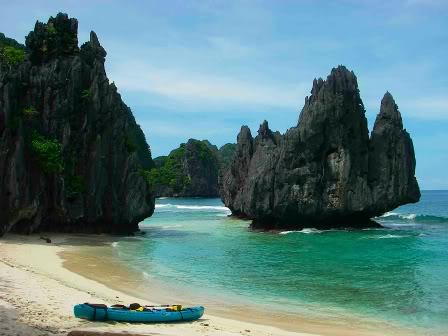
The massive limestone cliffs in El Nido.

The clear, blue waters of Cebu.

The lush, rolling hills of Batanes.

The almost-perfect cone of majestic Mayon Volcano.

These are just some of the awe-inspiring sites to behold when traveling around the Philippines.

I’ve been fortunate to have traveled to quite a number of lovely places in the country primarily because of my profession, and due to a brief stint in the government in the early '90s, accompanying three successive Cabinet secretaries who frequently monitored their agency’s provincial projects.

Nothing compares to the beauty of the Philippines, simply because it offers a myriad of choices to travelers of all persuasions and budgets. And whether you’re a fellow Filipino or a foreigner, one can be sure of friendly locals at these tourist destinations, eager to help and ensure you have a great time.

Here are some of my favorite places in the country:

Albay

Mayon Volcano as seen from the Cagsawa Ruins.

THE still-active Mayon Volcano is one of the most moving and powerful sights I’ve ever been fortunate to behold in my life. Its near-perfect cone is simply breathtaking.

Aside from trekking to the volcano, you can also take an all-terrain vehicle straight up to the lava front. Other sites to visit are the Our Lady of the Gate Parish Church in Daraga that was built in the 18th century, the Cagsawa Ruins, Busay Falls, and Liñgon Hills where an underground tunnel built by the Japanese forces can be found.

Of course, the best part about visiting Albay is eating spicy Bicolano dishes, such as Bicol Express, a variety of meats and fishes cooked with coconut milk, and my favorite dried fish called New Look.

Where to stay: Hotel Venezia (www.hotelvenezia.com.ph) if you’re staying in Legazpi City and want comfortable, clean and value-for-money accommodations. For a luxury feel, check out Misibis Bay Resort in Cagraray Island (www.misibisbay.com).

Batanes

A traditional Ivatan stone house in Basco, Batanes.

SOME foreigners have compared Batanes to Scotland because of its wide-open spaces, lush greenery and deep-plunging cliffs.

Take a trip to “Marlboro Country”—a rolling hill with horses and cows roaming around or feeding on the grass. Visit colorful old churches, such as the Basco Cathedral built in 1783, the Mahatao Church (1787), San Jose Church (1814), etc. And if you can take a seasickness-inducing boat ride to Sabtang (one of three major inhabited islands of Batanes), drop by Savidug, a village of traditional limestone houses still used by the locals (or Ivatans).

Where to stay: Batanes Resort is a 10-minute ride from the capital, and sits on a hill overlooking the sea. Built to resemble the Ivatan houses, the establishment is clean and inexpensive, with basic amenities, such as hot and cold water. They also serve local Ivatan cuisine where I got my first taste of fried flying fish—delish! (For inquiries and reservations, call 927-2393, 0927-5829078.)

Bohol

The tarsier is one of the more popular tourist attractions in Bohol. (Photo by www.nocturnal-animals.com/.)

ASIDE from the world-famous Chocolate Hills, the must-see places in Bohol are the 18th-century churches, such as the baroque-inspired Baclayon Church and Loboc Church, which has an extensive collection of images of various and other religious paraphernalia.

Have a hearty lunch of Boholano dishes while cruising down Loboc River, then visit the smallest primate in the world, the tarsier, in several of the minizoos located along the river.

Other activities include swimming on Alona beach, scuba-diving on Balicasag Island, and dolphin-watching on Pamilican Island.

I was recently told that my favorite resort no longer offers the best customer experience so better click www.bohol.ph/resorts.php for a list of accommodations.

Boracay Island, Aklan

Boracay - the all-time best beach in the country and one of the most popular in the world.

NO doubt the long stretch of white-sand beach and its clear turquoise waters are still the major reasons people continue to flock to Boracay.

Aside from the usual island tours, spa massages, food tripping and bar hopping, and banana-boat rides, there is an amazing number of fun activities that can also be pursued. There’s rolling down a hill in a zorb (www.facebook.com/zorbboracay), feeding the fish while helmet diving, and para-sailing, to name a few.

Visitors have a choice of resorts featuring the barest minimum amenities to the most luxurious, while foodies will surely enjoy an array of local and international cuisine cooked with the most authentic ingredients.

Where to stay: Discovery Shores in Station 1, if you want the best luxury accommodations with the friendliest staff to boot (www.discoveryshoresboracay.com); and Sun Villa in Station 2, for a quiet escape, the best value spa, and home-cooked cuisine (www.boracaysunresorts.com.ph/villa.htm).

Cebu

Visit the Taoist Temple in Cebu City, and make your petitions to the gods.

I HAVE loved Cebu since I started going there in the 1980s. One can be sure of warm, friendly smiles, an inexpensive but belly-busting meal, and just great entertainment because after all, isn’t this the land of country’s best singers? And, of course, the tasty, herb-filled Cebu lechon is simply one of the best-tasting in the country.

Some of the most interesting sites are the Shrine of Magellan’s Cross which was planted by the Portuguese explorer Ferdinand Magellan’s men upon his arrival in Cebu in 1521; the Basilica Minore del Sto. Niño where the oldest image of the Christ Child is enshrined; and the Taoist Temple, which is guarded by fierce dragons and where the local Chinese go to pray and seek favors from ancestors and ancient gods.

Also take a trip to Carcar, which is less than an hour drive from the city, which is famous for its chicharon, leather sandals, Spanish-era and American-period houses, and the historic St. Catherine’s Church, which is the second-oldest church in Cebu, after the Basilica Minore del Sto. Niño.

Where to stay: BE Resort in Mactan for its hip, cool interiors, beach and tasty restaurant dishes (www.beresorts.com); Islands Stay Hotel in Cebu City for a value-chic stay (www.islandsstay.com) accessible to major malls, offices and tourist sites in the city.

Davao

Dr. Bo Puentespina's 'bird talk' at the Malagos Garden Resort's interactive bird show. (Photo courtesy Malagos Garden Resort.)

DAVAO’S marketing slogan “From islands to highlands” says it all.

You will need boundless energy and at least a week to enjoy all the pleasurable offerings of this region.

Climb Mount Apo and catch the sun breaking through the clouds; visit the mighty but endangered Philippine eagle at the Philippine Eagle Center; watch an entertaining interactive bird show at the Malagos Garden Resort; see the creepy bat cave on Samal island; or go ziplining in what is reputed to be Asia’s longest, which is definitely not for the faint-hearted.

Eating durian can be a challenge to first-time visitors—it tastes like heaven but smells like hell, goes a local saying—so if the smell is off-putting, you can try its other variants like candies, coffee (at the homegrown Blu Gre café), or ice cream (Donnabelle brand). Other than durian, pomelo and mangosteen are also plentiful and readily available in the market, supermarkets, and roadside fruit stands.

One of the remarkable food finds in Davao is the artisanal goat cheeses under the brand of Malagos Farms which are comparable in texture and taste to the foreign brands.

Where to stay: Marco Polo Hotel (www.marcopolohotels.com) is still the finest hotel in the city with its large comfortable rooms, and possibly the best Chinese restaurant in the area.
Palawan

Massive limestone cliffs dot the clear torquoise waters of El Nido, Palawan. (Photo from www.e-philippines.com.ph.)

ONE of my most memorable trips has got to be in El Nido, in northern Palawan.

Take a pump-boat ride and marvel at the colossal limestone cliffs or swim in the clean waters of Bacuit Bay where you can see schools of colorful fishes and other marine life. Or why not stop by a sandbar and enjoy the cold powder-fine, white sand under your feet?

Where to stay: Miniloc Island Resort (www.elnidoresorts.com) is in itself a tourist attraction, with its lush surroundings and water cottages built on stilts.

A must-see in Palawan is the Puerto Princesa Underground River, which has been gaining a massive amount of publicity since it was named one of the New Seven Wonders of Nature. The main attraction is the St. Paul’s underground cave where stalactites and stalagmites have formed over the years.

Where to stay: Hotel Fleuris in Puerto Princesa (www.fleuris.com) loves hosting groups—whether families or friends, so make sure you avail yourself of its barkada package.

By no means is this list complete. There are so many other gorgeous places to visit in the Philippines, and where travelers are assured of warm smiles and fun times.

(This piece was originally published in the BusinessMirror, Feb. 26, 2012. All photos by this blogger, unless otherwise specified. All rights reserved.)

November 21, 2010

In the thick of controversy*

TOURISM Secretary Alberto “Bertie” A. Lim likes to joke that his “claim to fame” is really being the younger brother of award-winning broadcast journalist Che-Che Lazaro. But it was their mother, Estefania Aldaba Lim, who was really the first “rock star” in the family. Fanny to her friends, she was the first female psychologist in the Philippines, the first woman appointed Cabinet Secretary, and the first woman to become special ambassador to the United Nations. (Her husband Luis Lim Sr., a San Miguel Corp. executive, passed away when Bertie was only 12.)

Now 61, Secretary Lim says his mother “was able to balance a busy career and being both mother and father to six children. She traveled a lot yet she was able to more than adequately meet our emotional and physical needs. Whenever she was abroad, she would write long letters to us. There was no Internet then so her letters were written longhand and sent by mail. She encouraged us to write her so that she had her finger on our collective pulse all the time. She was very firm but not overbearing. She was a strong woman but we never resented her brand of discipline. Her advantage was that she was a trained clinical psychologist so she knew human behavior quite well.”

I ask what his mother taught him about working for the government. Lim recalls: “My mom did not bring home her work. She did not talk about the rigors of public service. Perhaps we were too young to have been able to appreciate such a conversation anyway, but she did instill in us the value of hard work. At a young age, she sent me to the municipio to acquire a municipal permit. I had to go back several times before I got it right. From her, I learned to deal with people with politeness, and to be very meticulous in my work.”

Smarting from the critics

Patience and politeness are traits Lim certainly needs these days. Less than a day after the Department of Tourism (DOT) launched its new marketing slogan, “Pilipinas Kay Ganda!,” a hail of negative feedback rained on him and his other officials. (See “DOT launches new campaign” in the November 17 issue of BusinessMirror.)

(Botolan beach, Zambales)


Lim admitted in a radio interview on Wednesday that the criticisms hurt (“Masakit ang batikos.”), many of which ridiculed the slogan as being “too showbiz” or “lacking oomph!” Although he did tell me earlier that it was still in its conceptualization stage and was, by no means, final, I asked Lim if he was still open to changing the slogan itself. He texted back, saying: “PKG (Pilipinas Kay Ganda!) will undergo focus group discussions and other market tests before we spend money on its execution. If there are better ideas out there, we are open to them. But if there are only criticisms, then we hope there will be support for the superior idea of PKG.” (See BusinessMirror, Nov. 18, 2010.)+

Controversy is nothing new to Lim. When he was a director of the Civil Aviation Board (CAB), he was unceremoniously booted out by Malacañang after his statements supporting an open-skies policy reportedly ruffled the feathers of Lucio Tan, owner of Philippine Airlines, an ally of then President Gloria Macapagal-Arroyo (PGMA).

“I never got to talk to PGMA nor to her Executive Secretary about the decision to relieve me of my position at the CAB. I was merely told by a Palace functionary that ‘we all serve at the pleasure of the President.’ Then he made me guess what that meant. Since it was an election year, I knew what he meant. I was not surprised.”

That was a learning experience, he says. “The enemies of reform used heavy-handed tactics to force me out of office. I was bloodied, figuratively speaking, but unbowed. That experience taught me that what does not kill you makes you a better person,” Lim stresses.

Under the new administration of President Aquino, his policy push may soon come to fruition. In a speech at the launching of a new hotel in Cebu on November 10, Aquino hinted that he could be leaning toward a “pocket-sized” open-skies policy, where certain provinces would give liberal flying rights to foreign carriers.

If you build it they will come

Of course, Lim recognizes that more than a marketing plan and a liberalized aviation policy, a country first has to have the correct infrastructure to allow tourists to move freely about, from one destination to another.

(Our Lady of the Gate Parish Church, Daraga, Albay)


Fortunately, President Aquino has already made tourism a priority in his administration and has directed the Department of Public Works and Highways to work with the DOT to identify the infrastructure projects in tourism areas that need to be completed.

“The previous DOT administration has identified the Central Philippines as the focus for tourism infrastructure—this includes Palawan, Cebu, Sorsogon, Negros Occidental, Iloilo, etc. But that doesn’t mean we are to neglect the others. We can still push our medical tourism in Luzon…and we are thinking of developing a good destination in Manila. The Jesuits want to rebuild its old San Ignacio Church in Intramuros, so we can showcase all our ecclesiastical art there. We have so many of them just stored in the church bodegas. Then we can open the ground floor of some structures to cafés.”

But it isn’t merely a numbers game for the tourism chief. He would rather go for value than volume. “My philosophy is that if we keep the tourists here longer, it’s better because it will mean more revenues. So it’s important that we connect the destinations via better roads and airports.” So he envisions tourists spending a few days swimming in Boracay, then perhaps move on to Iloilo City to visit its old churches, then on to Guimaras for more beach time. Hopefully, these longer-term activities will help double the country’s tourism receipts which average only $2.5 billion a year, according to DOT statistics.

“We tend to spread the infrastructure across many places, we never complete the infrastructure in one place. For example, we build an airport, but there’s no road to the airport. How can you develop the product (tourist destination) and promote it if infrastructure isn’t complete?” Lim asks.

This has been essentially the template of Thailand, which has similar natural attractions as the Philippines, but has been able to attract the tourist numbers. In 2009, there were 14.15 million visitors to Thailand, compared to the Philippines’ three million. “Ninety-five percent of Thai roads are well-paved compared to our 20 percent. Their main gateway in Bangkok has several times the capacity of ours in Manila. They have pursued a more liberal civil aviation policy. There is three times the number of flights from Tokyo to Thai airports than there are from Tokyo to Philippine airports. So airfares from Tokyo to the Philippines are higher than airfares from Tokyo to Thailand due to greater competition. The Thais do not impose the common carriers tax (3 percent of the foreign carriers gross receipts here) that we do, and their airport officials do not charge the airlines for overtime as they are on three shifts, 24/7. We have to overcome these barriers to be more competitive,” Lim stresses.

Lifting of aviation taxes eyed

He also says it is imperative that the Aquino administration “work overtime to get an upgrade” from the U.S. Federal Aviation Agency and the European Union. In 2007, the FAA downgraded the Ninoy Aquino International Airport to category 2, because of its failure to meet safety standards, while in April 2010, the EU banned Philippine carriers from operating in the region. “The FAA downgrade has prevented one of our carriers (Philippine Airlines) from utilizing their new aircraft from flying into their originally intended destination. As a result, the airline has to continue to use their old and less fuel-efficient aircraft which are not as passenger-friendly. The European downgrade means that travelers from Europe are not covered by their insurance policies when taking domestic flights in the Philippines. Since tourists have lots of choices in their destination, they will pass over the Philippines to avoid all these hassles.”

(Songsong Ruins in Batanes)


But even if the government does manage to get the Naia upgraded, it is already too congested, what with its limiting runways. So the solution goes back to one already hatched during the administration of former President Fidel V. Ramos, that is, to move the international traffic to Clark, Pampanga. “While Naia has two runways, they are perpendicular to each other. Hence, the two are as good as one since both cannot be used simultaneously. Since [the Diosdado Macapagal International Airport in Clark] has the space to expand to a third parallel runway, it is the logical gateway to the country's main port of entry,” he explains.

He adds that he is also working with the Bureau of Internal Revenue to see if certain taxes imposed on foreign carriers could be lifted, such as the carriers tax and the gross billings tax. "If we remove this tax, the revenue to be generated for the increase in tourists will more than compensate for that loss of that common carriers tax (3% of the international carrier’s gross receipts),” he said. This tax isn’t imposed by any other country.

The gross billings tax, meanwhile, imposes a 2.5% tax on the gross revenues earned by the international carrier in the country. “Each tourist spends about $750 directly in this country. This, in turn, creates jobs in other allied sectors like transportation, agriculture, so you will need only 200,000 extra tourists to make up for the loss of the common carriers tax alone.”

Lim is also batting for the professionalization of tour guides. Having been president of Ten Knots Development Corp., former owner and operator of El Nido Resorts, he helped set up the El Nido Foundation which aims to improve the quality of life of the residents, as well as preserve the destination’s natural beauty and resources. He says they could use the same template in El Nido where “we got local guides who could give local color to the tourists. It was easier to keep them because they already resided there. We want those who have been trained already to, in turn, train the local guides in the provinces and regions, because they are the ones who know the history, the culture and the stories behind those local landmarks.”

When Lim is not busy rushing to yet another meeting, battling the mounting paperwork on his desk, or fending off his critics, he tries to keep fit by swatting at tennis balls every morning. He is married to the former Carla Campos Abreu, and they have been married for 38 years. “We lived one block apart from each other. I was studying in Ateneo, she in Maryknoll, so we were also neighbors in school. We met in a group date watching a movie.” The couple has three accomplished children—Lorenzo, 34; Laszlo, 32; and Liana, 23—and two grandchildren.

*This is an expanded version of my column, Something Like Life, originally published in the Nov. 19, 2010 issue of the BusinessMirror. Due to space constraints, I wasn't able to include Secretary Lim's position on other tourism-related issues for the paper. Let me add that this feature was planned a long time ago, even before the PKG controversy blew up, and was updated to reflect Lim's views on the matter. Something Like Life is published every Friday in the Life section of the BusinessMirror. Photo of Lim courtesy DOT. Tourism images copyright Ma. Stella F. Arnaldo, 2010.

+(UPDATE) Govt drops ‘Pilipinas Kay Ganda’ slogan. Read it here.

(UPDATE 2): 'Pilipinas Kay Ganda' officially dead, according to Sec. Lim. However, I think DOT still owes the public a more detailed explanation about what really happened especially in the light of the Campaigns & Grey press release. Was C&G actually paid or not? The taxpayers have a right to know. Abangan!