Showing posts with label Davao. Show all posts

December 30, 2012

Travel Bites: Divine Davao

DAVAO CITY today is hardly recognizable from the days when it was just a sleepy one-note town with a lone hotel and a central shopping center filled with tribal handicraft, as visitors breathed in the air sweetened by the heady scent of ripened durian. And mind you, that was just less than 30 years ago. 

Today Davao is suffused with as much sophistication as Manila, sans the choking pollution and rampant petty thievery. Its marketing slogan “From Islands to Highlands” says it all. It caters to a myriad of visitors —from extreme adventurists (Mount Apo mountain climbing) and wildlife enthusiasts (Philippine Eagle Center), to shopaholics (SM Lanang Premier and Ayala Corp.’s Abreeza Mall) and spaholics (Lazuli Spa, Marco Polo Davao); from sports enthusiasts (ziplining and wakeboarding) and beach bums (Samal Island), to foodies trying to further enrich their palates (Malagos Garden artisanal goat cheeses). 


Must-sees 
The People's Park with its Durian Dome is a landmark in Davao City. Residents enjoy relaxing under its shady trees, and appreciate the parks sculptures, water features, etc. 

Rich culture and history. Take a walk around the city, starting with the People’s Park (Jose Camus and J. Palma Gil streets), whose main entrance is outfitted with a durian-shaped dome. Amid the lush greenery are sculptures depicting the indigenous tribes of Davao by local artist Kublai Millan. 

From there, go to the San Pedro Cathedral (San Pedro Street and C.M. Recto Avenue), said to be the oldest church in Davao, whose original structure was built in 1847. It has undergone several reinventions with its current façade supposedly designed to resemble a vinta, the traditional boat used by the Badjao tribe of Mindanao, gliding over the water. 

Last, check out Museo Dabawenyo (Fr. Selga Street), which showcases the rich and culturally diverse history of Davao. Featured are arts and crafts of the local tribes, as well as traditional weaponry, clothing and money. Contact Alex Divinagracia of Globalwings Travel Davao (CP# 0917-7000350/0932-8848198) for city tours. 

Ten tribes, one vibe. The Kadayawan Festival is the city’s most popular and colorful fiesta usually held every August to celebrate Davao’s rich cultural heritage and the harvest season. It features a parade of the 10 tribes of Davao—with each group donning its unique costumes and dancing to its tribal music—talent and beauty contests; and a parade of floats. 


The Kadayawan Festival is usually marked with colorful parades as Davaoeños dress in intricately-designed native costumes.

Interactive bird show. The Amazing Bird Show of veterinarian Dr. Bo Puentespina is a fun and entertaining way to educate children about Philippine birds and the environment, in general. Dr. Bo’s smart cheeky birds swoop down on the audience as they play their tricks. The show is at the Malagos Garden Resort (Barangay Malagos, Calinan, Davao City), which also features a butterfly sanctuary (what a thrill it is when the critters land on your palm!), an ostrich and goat farm (its chevre is now served on international flights of Philippine Airlines), and an orchidarium (the world-famous waling-waling is cultivated here). Call (082) 301-1375 or  0917-7008583 for inquiries. 

Artistic leanings. Colorful traditional tribal weaves and natural products of its indigenous groups are available at the Aldevinco Shopping Center (Claro M. Recto Avenue and Manuel Roxas Boulevard). The Kublai Art Gallery (5F Yahu Plaza, Bangoy Street) features artworks by local artist Kublai Millan as well as other visual artists. 


To-do’s 
Durian-durian. Some describe it as sweet-smelling day-old gym socks but one cannot argue with its incredibly creamy taste. If you can’t take the pungent smell, there are durian candies and ice cream available in any of the local supermarkets, while Blugré Café sells durian coffee. Durian, mangosteen and other local seasonal fruits can be purchased at the fruit stands beside the Aldevinco Shopping Center. 

Have tuna 10 ways! The freshest of tuna lands in Davao daily. You can have your fill of this fleshy fish in 10 exciting ways at Marina Tuna (Km. 8, Barrio Pampanga, Sasa). If you opt for a breezier meal, head over to Times Beach, where its many roadside eateries will jostle for the recognition of serving the best tuna kinilaw. It is a public beach only two kilometers from the city proper, and easily accessible by public and private transportation. 


Another worthwhile culinary expedition is to Claude’s Le Café de Ville (Habana Compound, on Rizal Street), which serves authentic French cuisine, and hailed by even some of Manila’s most discriminating French chefs. Noteworthy items on the menu are the pate foie gras, French onion soup, Steak Tartare, Frog Legs a La Provencal, to name a few. 


Lazuli Spa with its superb massage treatments is one of the best reasons to check into the Marco Polo Hotel. (Photo from Marco Polo Davao.)

Chill-out joints. The Matina Town Square (MacArthur Highway, Matina) has the perfect combination for late night owls—cheap beer and bar chow, as well as good old live music. Kanto Bar and Taboan are its most popular joints as bands with saucy names like the Naughty Notes play.

For more rarefied air and spirits, check out Eagles Bar (Marco Polo Davao, CM Recto Street). It offers tapas and a wide list of alcoholic beverages, as well as two giant TV screens so guests can catch the latest sports matches.


Where to stay 
Villa Margarita Hotel (J. P. Laurel Avenue) is an inexpensive way to stay in Davao. With only 32 suites, guests are assured of a being attended to by its most alert and courteous staff. (For inquiries and reservations, call 082-221-5674 to 75 or +63922-890-0844.)

Marco Polo Davao remains the consistent choice for guests wanting a more luxurious flavor. Comfortable beds, an excellent in-house spa, superb meals at the Café Marco and authentic Cantonese cuisine at the Lotus Court, and an outdoor lap pool. Its suites offer butler service. (For reservations, call 082-221-0888.)  


Getting there: Five local carriers and two international airlines regularly fly to Davao City from Clark, Manila, Cebu, Puerto Princesa, Kalibo, Zamboanga, Cagayan de Oro, Dipolog, Butuan, Singapore and Kota Kinabalu. 

Getting around: Taxis are the most convenient way of getting around Davao City; all are metered and air-conditioned. What’s more, there are taxi  companies like Mabuhay Taxis which accept payments made through ATM or credit cards. Jeepeneys are readily available 24 hours a day as well, plying those routes even not normally accessible to taxis. For more about Davao, go to www.davaocity.gov.ph/davao. 

(Travel Bites is published every Monday in the front page of the BusinessMirror. This piece on Davao was published on Oct. 8, 2012. Photos courtesy Department of Tourism-Davao unless otherwise specified.)

March 27, 2012

My favorite destinations in the Philippines

THE cool, powdery-white sands of Boracay.

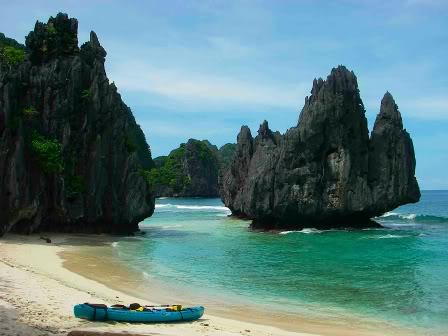
The massive limestone cliffs in El Nido.

The clear, blue waters of Cebu.

The lush, rolling hills of Batanes.

The almost-perfect cone of majestic Mayon Volcano.

These are just some of the awe-inspiring sites to behold when traveling around the Philippines.

I’ve been fortunate to have traveled to quite a number of lovely places in the country primarily because of my profession, and due to a brief stint in the government in the early '90s, accompanying three successive Cabinet secretaries who frequently monitored their agency’s provincial projects.

Nothing compares to the beauty of the Philippines, simply because it offers a myriad of choices to travelers of all persuasions and budgets. And whether you’re a fellow Filipino or a foreigner, one can be sure of friendly locals at these tourist destinations, eager to help and ensure you have a great time.

Here are some of my favorite places in the country:

Albay

Mayon Volcano as seen from the Cagsawa Ruins.

THE still-active Mayon Volcano is one of the most moving and powerful sights I’ve ever been fortunate to behold in my life. Its near-perfect cone is simply breathtaking.

Aside from trekking to the volcano, you can also take an all-terrain vehicle straight up to the lava front. Other sites to visit are the Our Lady of the Gate Parish Church in Daraga that was built in the 18th century, the Cagsawa Ruins, Busay Falls, and Liñgon Hills where an underground tunnel built by the Japanese forces can be found.

Of course, the best part about visiting Albay is eating spicy Bicolano dishes, such as Bicol Express, a variety of meats and fishes cooked with coconut milk, and my favorite dried fish called New Look.

Where to stay: Hotel Venezia (www.hotelvenezia.com.ph) if you’re staying in Legazpi City and want comfortable, clean and value-for-money accommodations. For a luxury feel, check out Misibis Bay Resort in Cagraray Island (www.misibisbay.com).

Batanes

A traditional Ivatan stone house in Basco, Batanes.

SOME foreigners have compared Batanes to Scotland because of its wide-open spaces, lush greenery and deep-plunging cliffs.

Take a trip to “Marlboro Country”—a rolling hill with horses and cows roaming around or feeding on the grass. Visit colorful old churches, such as the Basco Cathedral built in 1783, the Mahatao Church (1787), San Jose Church (1814), etc. And if you can take a seasickness-inducing boat ride to Sabtang (one of three major inhabited islands of Batanes), drop by Savidug, a village of traditional limestone houses still used by the locals (or Ivatans).

Where to stay: Batanes Resort is a 10-minute ride from the capital, and sits on a hill overlooking the sea. Built to resemble the Ivatan houses, the establishment is clean and inexpensive, with basic amenities, such as hot and cold water. They also serve local Ivatan cuisine where I got my first taste of fried flying fish—delish! (For inquiries and reservations, call 927-2393, 0927-5829078.)

Bohol

The tarsier is one of the more popular tourist attractions in Bohol. (Photo by www.nocturnal-animals.com/.)

ASIDE from the world-famous Chocolate Hills, the must-see places in Bohol are the 18th-century churches, such as the baroque-inspired Baclayon Church and Loboc Church, which has an extensive collection of images of various and other religious paraphernalia.

Have a hearty lunch of Boholano dishes while cruising down Loboc River, then visit the smallest primate in the world, the tarsier, in several of the minizoos located along the river.

Other activities include swimming on Alona beach, scuba-diving on Balicasag Island, and dolphin-watching on Pamilican Island.

I was recently told that my favorite resort no longer offers the best customer experience so better click www.bohol.ph/resorts.php for a list of accommodations.

Boracay Island, Aklan

Boracay - the all-time best beach in the country and one of the most popular in the world.

NO doubt the long stretch of white-sand beach and its clear turquoise waters are still the major reasons people continue to flock to Boracay.

Aside from the usual island tours, spa massages, food tripping and bar hopping, and banana-boat rides, there is an amazing number of fun activities that can also be pursued. There’s rolling down a hill in a zorb (www.facebook.com/zorbboracay), feeding the fish while helmet diving, and para-sailing, to name a few.

Visitors have a choice of resorts featuring the barest minimum amenities to the most luxurious, while foodies will surely enjoy an array of local and international cuisine cooked with the most authentic ingredients.

Where to stay: Discovery Shores in Station 1, if you want the best luxury accommodations with the friendliest staff to boot (www.discoveryshoresboracay.com); and Sun Villa in Station 2, for a quiet escape, the best value spa, and home-cooked cuisine (www.boracaysunresorts.com.ph/villa.htm).

Cebu

Visit the Taoist Temple in Cebu City, and make your petitions to the gods.

I HAVE loved Cebu since I started going there in the 1980s. One can be sure of warm, friendly smiles, an inexpensive but belly-busting meal, and just great entertainment because after all, isn’t this the land of country’s best singers? And, of course, the tasty, herb-filled Cebu lechon is simply one of the best-tasting in the country.

Some of the most interesting sites are the Shrine of Magellan’s Cross which was planted by the Portuguese explorer Ferdinand Magellan’s men upon his arrival in Cebu in 1521; the Basilica Minore del Sto. Niño where the oldest image of the Christ Child is enshrined; and the Taoist Temple, which is guarded by fierce dragons and where the local Chinese go to pray and seek favors from ancestors and ancient gods.

Also take a trip to Carcar, which is less than an hour drive from the city, which is famous for its chicharon, leather sandals, Spanish-era and American-period houses, and the historic St. Catherine’s Church, which is the second-oldest church in Cebu, after the Basilica Minore del Sto. Niño.

Where to stay: BE Resort in Mactan for its hip, cool interiors, beach and tasty restaurant dishes (www.beresorts.com); Islands Stay Hotel in Cebu City for a value-chic stay (www.islandsstay.com) accessible to major malls, offices and tourist sites in the city.

Davao

Dr. Bo Puentespina's 'bird talk' at the Malagos Garden Resort's interactive bird show. (Photo courtesy Malagos Garden Resort.)

DAVAO’S marketing slogan “From islands to highlands” says it all.

You will need boundless energy and at least a week to enjoy all the pleasurable offerings of this region.

Climb Mount Apo and catch the sun breaking through the clouds; visit the mighty but endangered Philippine eagle at the Philippine Eagle Center; watch an entertaining interactive bird show at the Malagos Garden Resort; see the creepy bat cave on Samal island; or go ziplining in what is reputed to be Asia’s longest, which is definitely not for the faint-hearted.

Eating durian can be a challenge to first-time visitors—it tastes like heaven but smells like hell, goes a local saying—so if the smell is off-putting, you can try its other variants like candies, coffee (at the homegrown Blu Gre café), or ice cream (Donnabelle brand). Other than durian, pomelo and mangosteen are also plentiful and readily available in the market, supermarkets, and roadside fruit stands.

One of the remarkable food finds in Davao is the artisanal goat cheeses under the brand of Malagos Farms which are comparable in texture and taste to the foreign brands.

Where to stay: Marco Polo Hotel (www.marcopolohotels.com) is still the finest hotel in the city with its large comfortable rooms, and possibly the best Chinese restaurant in the area.

Palawan

Massive limestone cliffs dot the clear torquoise waters of El Nido, Palawan. (Photo from www.e-philippines.com.ph.)

ONE of my most memorable trips has got to be in El Nido, in northern Palawan.

Take a pump-boat ride and marvel at the colossal limestone cliffs or swim in the clean waters of Bacuit Bay where you can see schools of colorful fishes and other marine life. Or why not stop by a sandbar and enjoy the cold powder-fine, white sand under your feet?

Where to stay: Miniloc Island Resort (www.elnidoresorts.com) is in itself a tourist attraction, with its lush surroundings and water cottages built on stilts.

A must-see in Palawan is the Puerto Princesa Underground River, which has been gaining a massive amount of publicity since it was named one of the New Seven Wonders of Nature. The main attraction is the St. Paul’s underground cave where stalactites and stalagmites have formed over the years.

Where to stay: Hotel Fleuris in Puerto Princesa (www.fleuris.com) loves hosting groups—whether families or friends, so make sure you avail yourself of its barkada package.

By no means is this list complete. There are so many other gorgeous places to visit in the Philippines, and where travelers are assured of warm smiles and fun times.

(This piece was originally published in the BusinessMirror, Feb. 26, 2012. All photos by this blogger, unless otherwise specified. All rights reserved.)

July 13, 2011

PH has 'positive image' among Chinese travelers

(Marco Polo Parkside Beijing general manager Stanley Lau, fourth from left, and Philippine government officials toast the official launch of the Davao Cultural Festival at the hotel on June 11, at the Café Marco Polo. The promotion will run until June 30 and is co-sponsored by Cebu Pacific and the Department of Tourism-Region 11. From left, after the emcee, are Mary Ann Montemayor, chairman of the Davao Regional Tourism Council; Art Boncato, regional director of DOT-11; Richard Chang, the hotel’s director of sales and marketing; Alex Chua, charge d’affaires of the Philippine Embassy in Beijing; and Jazmin Esguerra, tourism attaché, Philippine Embassy, Beijing. China is the fourthlargest tourism market of the Philippines. PHOTO BY ARNOLD KING)

BEIJING—The hostage crisis involving Hong Kong tourists in 2010 and the ongoing skirmishes in the South China Sea (now West Philippine Sea to the Philippines) between the Philippines and China are not deterring the influx of Chinese tourists into the Philippines.

The Chinese market is expected to further improve, especially with the recent marketing push of Davao as an ecotourism, extreme adventure, and culinary destination, especially among Beijing travelers, a Philippine tourism official said.

Cebu Pacific, meanwhile, is assessing the feasibility of plying a Davao-Beijing route, an airline representative said.

In an interview, Jazmin C. Esguerra, tourism attaché of the Philippine Embassy in Beijing, said Chinese travelers, especially from this city, are currently on the lookout for new exciting destinations in the Philippines.

“The honeymooners, for example, like island destinations and Davao will be a perfect new addition to their itinerary because it has Samal Island, and island-hopping tours,” Esguerra said.

Data from the Department of Tourism (DOT) showed that Chinese travelers to the Philippines grew 18.54 percent to 71,113 from January to April 2011, making them the fourth-largest tourism market. For 2010 alone, arrivals from China jumped 21 percent to 187,446, just ranking behind arrivals from Korea, the United States and Japan.

Esguerra said this substantial growth in arrivals indicated that the Philippines still has a “positive image” among Chinese travelers, despite the bungled hostage rescue attempt in August 2010. “While there were some tour groups that canceled their trips to the Philippines via their travel agencies for about two months after the incident, many of them booked their trips directly online,” she said.

Esguerra added that current dispute over the Spratly’s Islands has “presently no effect” on the tourism decisions of the Chinese. “Tourism is nonpolitical,” she said.

Many Beijing travelers, she added, are now spending more on travels because they are earning more, and have become tech-savvy—they now do most of their bookings and reservations online.

“They see the Philippines as a romantic destination, that’s why they often go to Boracay and Palawan. And because of the tsunami [which recently hit Japan], they have redirected their focus on Southeast Asia,” Esguerra said. Her office is currently helping push the Philippines as a wedding and honeymoon destination, which will attract more upmarket travelers from Beijing.

Aside from being a romantic destination, the Philippines has also become an ideal destination for the meetings, incentives, conferences and exhibitions market. She said a group of 85 company employees recently traveled to the Philippines as part of their incentives package.

A Davao Cultural Festival is currently being held at the Marco Polo Parkside Beijing, on the initiative of its general manager Stanley Lau, who managed the hotel’s Davao unit from 2004 to 2009.

The Davao delegation earlier made presentations before members of the Chinese media, promoting the many activities that can be pursued in the city.

Art Boncato, regional director for DOT’s Region 10 said the cultural festival, themed “From Islands to Highlands” was in line with the Philippine Independence Day celebration at the hotel. The event was also cosponsored by Cebu Pacific, with the participation of the Davao Region Tourism Council, Davao Eco-Crafts and the Center for Asian Culinary Studies-Davao (CACS).

The festival was launched on June 11 and will run until June 22, while the dishes of Davao will be a mainstay during the lunch and dinner buffets at the hotel’s Café Marco until June 30. The dishes featured at the food fest were by Chef Gene Gonzalez and his CACS crew. While the festival is ongoing, cultural dancers from Davao will provide entertainment for Café Marco’s guests.

Meanwhile, Agnes Gupalor, Cebu Pacific’s sales manager for the Visayas region told the BusinessMirror the airline is “currently studying” the market for Chinese travelers to find out if it would be feasible to have direct flights between Davao and Beijing. Davao already hosts an international airport where Silk Air flies regularly from and to Singapore.

Addressing members of the Chinese media, Gupalor said the airline “is very optimistic about expanding our services in North Asia, especially with the observed 23-percent year-on-year passenger growth in Greater China for the first quarter of 2011.” The airline’s general sales agent in Beijing is Pacific Aviation.

She noted that in May 2011, the airline “carried over 1 million passengers in one month alone, a first for any Philippine carrier in the history of Philippine aviation.”

(My story was originally published in the BusinessMirror on June 21, 2011.)

June 18, 2011

Lost in translation

I’VE always loved traveling to new and exotic places, because of the cultural dimensions it opens up. Being in a new country, and meeting all sorts of nationalities keep me educated and well-informed of the goings-on in the bigger world. In this era of globalization, one cannot be too preoccupied with just local concerns.

I’ve just come back from a trip to Beijing upon invitation of the Department of Tourism. I was with my friend Art Boncato, former marketing manager of Marco Polo Hotel in Davao City, and who is now the regional director for the Department of Tourism’s Region 11, and a wonderful group of government and private tourism representatives.

I think Boncato is a good choice for the region because he has always been such a productive and diligent worker ever since I met him. For sure, he is the best person to market the region to tour operators and travel establishments here and abroad. In fact, the event I was covering in Beijing was the launch of the Davao Cultural Festival at the Marco Polo Parkside, ongoing until June 30.

(Of course, I am not surprised that Boncato works the way he does because his boss at the Marco Polo was none other than Halifax Capital chairman Carlos “Sonny” Dominguez, who was also my old boss at the Department of Agriculture and whom I had covered previously as a beat reporter back when I was still young and innocent to the ways of the world. When you have a boss like Sonny, you are forced to become smarter and tireless in your job...or face the consequences, hahaha.)

Unfortunately, for the most part of the trip, I was sick. I was battling a nasty cough and terrible colds and virtually sidelined for two-and-a-half days. It sucks to be sick, and all the more when you are in another country where only a handful speak English. Your patience is virtually pushed to the limit, and you either have to choose your words carefully and use the barest and simplest to get your point across, or die trying.

One time I was trying to explain to a waitstaff at a local roast duck restaurant that I didn’t order the bottle of Evian water that they gave me. Hello, Evian is expensive in any part of the world! There was no way I’d be paying for that! Maybe it’s the favorite bottled water of Americans and European tourists. Unfortunately for them, I’m a cheap Pinoy tourist.

It can be quite upsetting when there is no meeting of the minds on the ideas presented to each other, and I suppose this was why I really couldn’t recover from my illness much more quickly. (I woke up one morning without my voice actually, and to this day, my normally high-pitched soprano is still a bass. Ugh.) I was too stressed, wildly gesturing or trying to endlessly explain to the other person what I needed or wanted information on.

But despite the sometimes distressing moments, there were a number of instances of joy, as well. I found many Chinese, especially the younger generation, always eager to talk to me and willing to help me out any way they could. Of course, for the most part, they all wanted to practice their English on me, which made me even more enthusiastic in speaking with them to help them out in their pronunciations or vocabulary.

(According to my tour guide Lucy, they have to pass some English exams before they graduate from the university, but since they have no one to practice the language with, sometimes they tend to forget the words and meanings. But most of the young Chinese can read English well, and translate the words to their own Chinese characters.)

(With my new friends, salesladies April, left, and Mao-Mao, at the Silk Market. Photo copyright owned by Stella Arnaldo)

This was quite helpful because when I had to buy cough medicine, for instance, the hotel concierge, after Googling the kind I should buy at the pharmacy, wrote its name in Chinese characters so it would be easier for me to make a purchase. And even at the pharmacy, given a choice between two locally-manufactured cough syrups, the pharmacist earnestly indicated which had the more effective formulation by giving a two-thumbs-up.

Also, when I was going around using the subway, the subway guides were always helpful in pointing out what line to take whenever I approached them in a moment of confusion. One female guide in her 20s, wrote everything down for me—in Chinese script and English numerals—all the lines I had to take to make sure I got back to my hotel in one piece.

(An aside: the Beijing subway system is a marvelous mass of interconnectivity, which we should try to duplicate for our metro railway systems. Connections from one line to another are seamless, and all announcements of train stops are made in Mandarin and English so there is very little chance of a tourist getting lost. Also there is an illustrated map of the subway line where each station lights up as the train arrives at the said station.)

Lucy, my tour guide to the Beijing Acrobatics Show, and her driver Mr. Pei also went out of their way to give me a tour of the Water Cube and the Bird’s Nest after the show. I had seen them in the daytime but these two architectural wonders are so much more gorgeous lit up in the evening sky. The latter wasn’t part of our itinerary but it touched me that they wanted to please me so I could take home good memories of Beijing.

Despite the language barrier, Beijing is quite an exciting and pleasant place to be. It’s no wonder so many foreign tourists have gone there, and companies have decided to set up shop. (Of course, the rising status of living of its residents makes them a prime target for foreign consumer goods.)

I will treasure the number of friendships I have formed with the tour guides and sales ladies at the Silk Market (most of whom I promised to bring more customers from Manila), and look forward to seeing them again when I return in the near future. I also cherish my hardworking cleaning ladies on my hotel floor, who never forgot to leave me six bottles of water every day because they knew I was sick, and had difficulty with my cough.

The often befuddling lost-in-translation moments are awkward for sure. But for the most part, I love the Beijingers for their eagerness to learn and educate themselves, and their motivation to please their guests and visitors. I can’t wait to go back.

(My column, Something Like Life, is published every Friday in the Life section of the BusinessMirror. This piece was originally published on June 17, 2011)

November 16, 2007

And I'm off!

For a vacation, that is. So no postings in the meantime, if I can help it. When on vacation, I try to stay away from the computer and cellphone, especially if there are calls or texts from Manila. I was unsuccessful in doing the above in my last 10-day holiday and ended getting hooked again on Manila issues. Anyway, I hope to return with some kwento about my trip. And maybe post some nice photos, too.

So allow me to leave you with this story on Marianeth Amper, the child who hanged herself recently. Turns out she was raped. So much for the Presidentita's "too much politics" theory. But then again, it's no surprise. This is one woman who's out of touch with reality because she lives in a fantasy world right in her head where she is beautiful, bright, and loved by all. I think doctors have a term for that...psychosis?

Btw, doesn't Mayor Duterte sound like he is no longer a fan of the Presidentita as well? Hmmm...I wonder.

Marianeth was raped – NBI
By Edith Regalado
Phil. Star Nov. 16, 2007


DAVAO CITY — Results of the autopsy conducted yesterday on the exhumed remains of 12-year-old Marianeth Amper, who was earlier reported to have committed suicide allegedly because of extreme poverty, showed she was raped.

“In my theory, in my book, the girl took her life because she was raped and not because of poverty,” Davao Mayor Rodrigo Duterte said during a press conference here early last night wherein the results of the autopsy were presented to the media.

“From now on, the death of Marianeth, would be the subject of criminal investigation and not suicide as somebody else could have also killed her,” Duterte said.

According to Southern Mindanao Crime Laboratory Office head Dr. Tomas Dimaandal Jr., who conducted the autopsy, Amper’s genitals bore lacerations that could indicate rape.

Dimaandal likewise said that Amper died of a single neck injury based on the trauma that emerged wherein a single ligature mark was seen on her neck.

The medico-legal officer also stressed that Amper was not pregnant contrary to earlier speculations.

Duterte pointed out that any sexual penetration on a girl as young as Amper would be considered rape even if she could have consented to it because of her young age.

“That is rape,” the mayor quipped.

Duterte said he already ordered Talomo police station chief Superintendent Matthew Baccay to invite Amper’s father, Isabelo, for questioning.

“I would really like to ask the father why he reported the incident to the police only last November 6 when the incident happened on November 2. Any father in his right mind would really go to the police and report the case immediately since it is your daughter who has died in that way,” Duterte said. (The rest at Phil. Star.)