MANILA, Philippines – The Civil Aviation Authority of the Philippines (CAAP) has finally given Seair International (Seair-I) the green light for its flight operations beginning this month.
The company’s Vice Chairman Nikos Gitsis said in an interview Seair-I is launching its maiden flight from Manila to Basco, Batanes on December 7.
“The plan is, we will fly Fridays and Mondays and we will go from there. It could become three times a week,” he said. The carrier will use a 32-seater Dornier 328 turboprop for this service.
He said the carrier will also offer a “VIP charter service early next year for domestic and international routes” using a seven-seater Falcon 10 jet.
“[Apart from the scheduled Basco flights] we will focus on charters for the time being, and we will explore and open up new destinations,” Gitsis added (Read the rest at InterAksyon.com. This piece was originally published on Dec. 2, 2012.)
Showing posts with label Tomas B. Lopez Jr.. Show all posts
Showing posts with label Tomas B. Lopez Jr.. Show all posts
January 02, 2013


August 19, 2012
Tiger Airways completes purchase of 40% of Seair
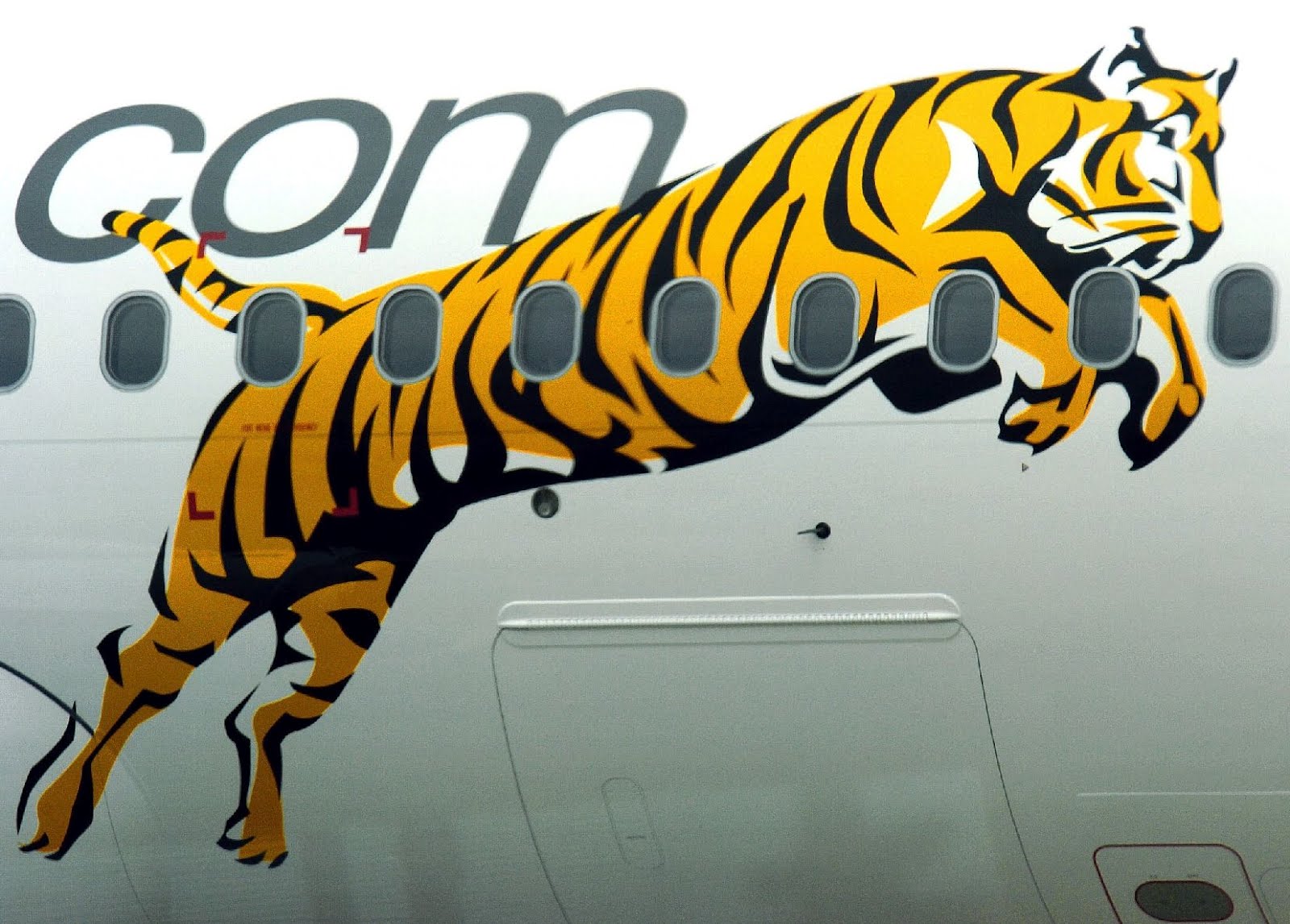
SINGAPORE-based budget carrier Tiger Airways has completed the purchase of a 40-percent stake in a Philippine aviation firm, Southeast Asian Airlines, for $2.5 million.
In a disclosure statement filed on Tuesday morning at the Singapore Exchange, Tiger Airways Holdings Ltd. said it would also lend $40 million in working capital to Seair over a five-year term.
On Monday night Seair officials and their lawyers from the Romulo Mabanta Buenaventura Sayoc & de los Angeles Law Offices hammered out the final details of the Tiger Air investment with the latter’s lawyers from the Angara Abello Concepcion Regala & Cruz Law Offices.
The meeting took place at the AccraLaw’s board room in its building at The Fort, Taguig City, and started at 5 p.m., ending past 10 p.m., according to sources.
At the meeting, elected chairman of the board of Seair was Koay Peng Yen, chief executive officer of the Tiger Group. Other members of the board are Patrick Tan, Chris Ward, Tomas B. Lopez, Geraldine Olivares and Olma Inocentes. The sources said the board seats “may be expanded to nine.”
Appointed new president and chief executive officer was Patrick Tan, Seair former vice president for marketing, and chief operating officer, vice Avelino Zapanta.
 Patrick Tan, newly appointed president and chief executive officer of Seair. (Photo courtesy Patrick Tan)
“This deal represents a significant step forward for Seair and will allow the airline to continue its tremendous growth and job-creation drive for Filipinos, bringing increased prosperity, highly-skilled jobs and tourism to the country,” newly appointed CEO Patrick Tan said in a separate statement.
He added that Zapanta, who was “instrumental in helping Seair grow into the airline that it has become today, will continue to share his expertise and wealth of experience in his new position as senior adviser to Seair.”
Zapanta has contributed over six years of his career to bring this transaction to a close and secure a proper succession with the appointment Tan as Seair’s new chief.
According to Tiger Air’s disclosure statement to the SGX, “The purchase price of $7 million, which was agreed with the sellers, has been reduced by the liabilities determined in a due diligence review. The investment will be held through Tiger’s wholly owned subsidiary Roar Aviation II Pte. Ltd.”
The BusinessMirror sources said shares of co-founders Iren Dornier, a German pilot, businessman and scion of the historic Dornier aviation family; and Greek-American Nikos Gitsis were the ones purchased by Tiger Air. The rest of the Filipino shareholders led by Lopez will continue to hold their investments in Seair, representing a 60-percent stake.
Seair is helping promote the Philippines as a key tourism destination in Asia by painting two of its Airbus A320-232s with the Department of Tourism’s new campaign slogan “It’s More Fun in the Philippines.” (See “Seair takes ‘more fun’ to the skies” in the BusinessMirror, August 13, 2012.)
In its disclosure to SGX, Tiger Air said it “is committed to supporting the working capital needs of Seair, including pre-existing liabilities, with shareholder loans of up to $40 million. The loan tenure will be five years.”
 The logo of Seair Inc.
Koay Peng Yen, chief executive officer of the Tiger Group said, “Together with our Philippine business partners, our immediate focus will be on scaling up the business through network expansion, building a strong customer base and establishing the airline’s brand presence.”
He added, “The Philippines has tremendous growth potential and we welcome the opportunity to be at the heart of it.”
Tiger said its investment in Seair is the Singapore firm’s second joint venture. In January 2012 Tiger bought 33 percent of Mandala Airlines of Indonesia. “The acquisitions are in line with Tiger’s strategy to expand and develop its business in the region.”
Seair will be adopting Tiger’s LCC (low-cost carrier) business model that includes “offering value fares to domestic and international destinations within a five-hour flying radius of the Philippines.”
Established in 1995 in Clark, Pampanga, Seair was one of the pioneers in the local aviation industry flying to Caticlan, Aklan, the gateway to Boracay Island and picking up a few of the missionary routes, which flag-carrier Philippine Airlines was forced to abandon when it underwent financial rehabilitation.
Under a strategic partnership agreement with Tiger, Seair is leasing two A319-200s and three A320-232s. “More aircraft will be progressively added to build Seair’s network,” as per Tiger’s disclosure to SGX.
Still branding itself as the “fastest flight to Boracay,” Seair now flies to Bacolod, Cebu, Davao, Iloilo, Puerto Princesa, Tacloban, Batanes, and Kalibo, while its international routes are to Hong Kong, Singapore, Bangkok, and Kota Kinabalu, and flying out of Clark.
The local airline is currently expanding its network domestically and internationally, and aims to fly some 2 million passengers this year.
According to its website, Seair has over 350 employees.
 Former Seair president Avelino Zapanta will be retained as adviser to the flag carrier. He is currently helping set up another airline affiliate for Seair.
Established in 2004, Tiger Airways’ majority shares are held by Singapore Airlines Ltd. (32.84-percent) and Dahlia Investments Pte. Ltd. (7.37 percent). It currently has a fleet of 34 aircraft, mostly Airbus A319s and A320s located in Singapore, Australia, Indonesia, and the Philippines.
Operating from Singapore and Australia, Tiger Airways’ network extends to over 30 destinations across 12 countries in the Asia Pacific region.
In fiscal year 2011, Tiger recorded a loss (after tax) of S$104.3 million, a reversal from the S$39.9 million it posted in FY 2010. The loss was attributed to disruption in services due to the ash cloud in Chile, the suspension of the carrier’s operations in Australia due to a “violation of procedures,” and higher fuel prices, according to its annual report to shareholders.
Tiger was listed on the SGX in January 2010.
(This is the unabridged version of my piece which was originally published in the front page of the BusinessMirror, Aug. 15, 2012.)
May 13, 2008
Seair revives talks with investors
(I've been on vacation so this is another lazy post...a story I wrote for BusinessMirror for its May 9/10 issue.)
SOUTHEAST Asian Airlines (Seair) is reviving talks with international investors following the rejection of a purchase offer by the group of industrialist Alfredo M. Yao. Yao is the founder of Zest-O Corp.
A highly-placed source from the local carrier told BusinessMirror “these talks were stalled when we thought we were already going to have a deal with Yao by June. So we’re just reviving them.”
The source declined to identify the foreign groups only saying that these were “from Singapore and Brunei,” for possible “capital infusion” into the local carrier.
Seair owners headed by co-founders Iren Dornier, Nikos Gitsis and the Filipino group led by marketing guru Tomas B. Lopez Jr., declined the offer by Yao to purchase their shares for $2 million (or P84.63 million). This was $1.75 million (P74 million) lower than the “original consensus price” of $3.75 million (P159 million), before Yao’s group conducted due diligence on the airline.
Yao said he still intends to pursue the purchase of the carrier.
Sources familiar with the matter said the $2-million offered by Yao’s group will only pay for the cost of the brand and takeover of employees. The group does not intend to buy the 10 aircraft Seair is currently leasing from Dornier’s Aviation Enterprise Inc. (AEI) and spare parts. Yao’s group will also not cover the debts of the carrier including the payables on the aircraft leases to AEI. “All of the liabilities of Seair will have to be paid by Gitsis [and company],” the sources added.
In the proposed share purchase agreement, “[Yao’s group] will lease aircraft from AEI on a “power-by-the-hour” basis, the same sources added. This means that Yao’s group will pay only for the actual use of the leased aircraft, even if these are parked in the airline’s hangar. With this commitment to lease AEI’s planes, “it’s like the offer price is still the same as what we had initially discussed,” explained another source from the Yao group.
There is also a non-compete clause in the proposed share purchase agreement between Yao and Seair shareholders. This means that Dornier and Gitsis, who are both pilots and who currently own 40 percent of Seair, cannot put up another carrier to compete with Yao’s airline.
BusinessMirror sources observed that “this clause was not present in the initial agreement between Yao and Asian Spirit’s former owners.” Yao said he intends to merge Asian Spirit and Seair into one airline company.
Yao bought Asian Spirit for about P1 billion but turned over a check amounting to only P700 million because his group was taking over the debts and liabilities of the airline.
In an earlier interview, Gitsis said Seair was “open to all possibilities” in terms of investments either through capital infusion or selling the owners’ shares “lock, stock and barrel.”
“We’re still open to selling [even just the shares owned by the foreign group]. In the long run, the airline needs partners that can help in [our] growth, to keep us up with the growth opportunities that are still open in the market,” he said.
Referring specifically to the negotiations with Yao, Gitsis said: “If the need for capital and aircraft is the main motivator, [we] don’t want to sell out. Our hearts are in the company and we are more than willing to stay, and more than willing to work another 13 years. [Dornier and I] love this country and we no longer consider ourselves foreigners. On the other hand, everything has a price in business.”
He said the airline sees massive potential growth in local tourism “and we can contribute to that in many ways.” But he said he hoped the Civil Aeronautics Board (CAB) would allow the airline to do just that by approving its lease purchase agreement with Tiger Airways.
In January 2007, Seair signed a lease purchase agreement with Tiger Air, the low-cost carrier subsidiary of Singapore Airlines. The deal was for the lease of two Airbus 320s from the regional carrier which would enable Seair to fly to Singapore and Macau, as well as other Asian destinations. Local carriers have opposed the agreement saying the partnership would give fifth-freedom rights to Tiger Air, thereby allowing it to transport passengers to a second country and onwards to a third country.
Due to opposition by local carriers, the CAB has yet to approve the agreement, preventing Seair’s efforts to expand its routes to international destinations using the Clark International Airport as a regional hub.
“Tiger Air gave us a challenge. We thought we could live up to the challenge and we’re still optimistic that we can overcome that challenge,” said Gitsis. He admitted that the regional carrier has also expressed interest in buying into Seair, “but we [foreign shareholders] would have to sell out.”
- - - -
P.S. I flew to Caticlan and back to Manila over the weekend via Seair and noticed that the drinks served to passengers were made by Zest-O. Hmmm...
SOUTHEAST Asian Airlines (Seair) is reviving talks with international investors following the rejection of a purchase offer by the group of industrialist Alfredo M. Yao. Yao is the founder of Zest-O Corp.
A highly-placed source from the local carrier told BusinessMirror “these talks were stalled when we thought we were already going to have a deal with Yao by June. So we’re just reviving them.”
The source declined to identify the foreign groups only saying that these were “from Singapore and Brunei,” for possible “capital infusion” into the local carrier.
Seair owners headed by co-founders Iren Dornier, Nikos Gitsis and the Filipino group led by marketing guru Tomas B. Lopez Jr., declined the offer by Yao to purchase their shares for $2 million (or P84.63 million). This was $1.75 million (P74 million) lower than the “original consensus price” of $3.75 million (P159 million), before Yao’s group conducted due diligence on the airline.
Yao said he still intends to pursue the purchase of the carrier.
Sources familiar with the matter said the $2-million offered by Yao’s group will only pay for the cost of the brand and takeover of employees. The group does not intend to buy the 10 aircraft Seair is currently leasing from Dornier’s Aviation Enterprise Inc. (AEI) and spare parts. Yao’s group will also not cover the debts of the carrier including the payables on the aircraft leases to AEI. “All of the liabilities of Seair will have to be paid by Gitsis [and company],” the sources added.
In the proposed share purchase agreement, “[Yao’s group] will lease aircraft from AEI on a “power-by-the-hour” basis, the same sources added. This means that Yao’s group will pay only for the actual use of the leased aircraft, even if these are parked in the airline’s hangar. With this commitment to lease AEI’s planes, “it’s like the offer price is still the same as what we had initially discussed,” explained another source from the Yao group.
There is also a non-compete clause in the proposed share purchase agreement between Yao and Seair shareholders. This means that Dornier and Gitsis, who are both pilots and who currently own 40 percent of Seair, cannot put up another carrier to compete with Yao’s airline.
BusinessMirror sources observed that “this clause was not present in the initial agreement between Yao and Asian Spirit’s former owners.” Yao said he intends to merge Asian Spirit and Seair into one airline company.
Yao bought Asian Spirit for about P1 billion but turned over a check amounting to only P700 million because his group was taking over the debts and liabilities of the airline.
In an earlier interview, Gitsis said Seair was “open to all possibilities” in terms of investments either through capital infusion or selling the owners’ shares “lock, stock and barrel.”
“We’re still open to selling [even just the shares owned by the foreign group]. In the long run, the airline needs partners that can help in [our] growth, to keep us up with the growth opportunities that are still open in the market,” he said.
Referring specifically to the negotiations with Yao, Gitsis said: “If the need for capital and aircraft is the main motivator, [we] don’t want to sell out. Our hearts are in the company and we are more than willing to stay, and more than willing to work another 13 years. [Dornier and I] love this country and we no longer consider ourselves foreigners. On the other hand, everything has a price in business.”
He said the airline sees massive potential growth in local tourism “and we can contribute to that in many ways.” But he said he hoped the Civil Aeronautics Board (CAB) would allow the airline to do just that by approving its lease purchase agreement with Tiger Airways.
In January 2007, Seair signed a lease purchase agreement with Tiger Air, the low-cost carrier subsidiary of Singapore Airlines. The deal was for the lease of two Airbus 320s from the regional carrier which would enable Seair to fly to Singapore and Macau, as well as other Asian destinations. Local carriers have opposed the agreement saying the partnership would give fifth-freedom rights to Tiger Air, thereby allowing it to transport passengers to a second country and onwards to a third country.
Due to opposition by local carriers, the CAB has yet to approve the agreement, preventing Seair’s efforts to expand its routes to international destinations using the Clark International Airport as a regional hub.
“Tiger Air gave us a challenge. We thought we could live up to the challenge and we’re still optimistic that we can overcome that challenge,” said Gitsis. He admitted that the regional carrier has also expressed interest in buying into Seair, “but we [foreign shareholders] would have to sell out.”
- - - -
P.S. I flew to Caticlan and back to Manila over the weekend via Seair and noticed that the drinks served to passengers were made by Zest-O. Hmmm...
May 07, 2008
Seair ‘rejects’ Yao offer, but talks ‘active’


(Seair owners: Iren Dornier, Nikos Gitsis, and Tomas B. Lopez Jr. representing Filipino shareholders. Photos of Dornier/Gitsis from the Iren Dornier Project. Photo of Lopez from AIM.)
THE owners of Southeast Asian Airlines (Seair) said they have rejected the offer of industrialist Alfredo M. Yao to purchase the airline, but the fruit-juice king’s camp stressed the two sides are still “actively talking.”
A highly placed source in the carrier told the BusinessMirror: “The deal is off. The offer is $2 million. [It's] too low from the original consensus price [between the owners and Yao’s group].”
Contacted for comment, Yao said, “Their group and ours are still talking. Nick [Gitsis, co-founder and director of the carrier] is still in the States, so we haven’t spoken to each other.”
While Yao did not wish to confirm how much his group’s offer price was, the Seair source said the owners had agreed to sell their shares to Yao at $3.75 million (or roughly P158 million at P42.315 to the dollar).
The price only covers the cost of the airline brand and the takeover of the staff, but not the planes. The 10-plane fleet of Seair — composed of three Dornier 328s and seven LET-410s — are turboprops currently leased from Aviation Enterprise Inc., a company owned by Seair founder Iren Dornier.
The source added that the notice to formally reject the deal has already been transmitted to Yao’s group.
Yao is widely known for having developed the fruit-juice drinks under the Zest-O brand, now the largest-selling ready-to-drink fruit-juice brand in the country. His recent purchase of Asian Spirit boosts his interests in the tourism sector, where he also owns a hotel in Subic Bay. (See my profile interview of Yao in the blog entry below.)
Despite the rejection of Yao’s offer, the Seair source was confident that the airline would continue operating. “We have a good safety record. We are No. 1 in our market.” He added that Dornier will continue to infuse capital in the airline even if the local shareholders won’t.
Gitsis earlier said a deal with Yao’s group could be announced before the end of June. (See “Yao bucks tide, may buy 2nd airline,” BusinessMirror, April 14.) The two parties have been negotiating Seair’s purchase since July 2007.
 (Industrialist Fred Yao)
Meanwhile, aviation analysts who requested anonymity said that with Yao’s recent purchase of Asian Spirit, he doesn’t need to purchase another carrier. “He has his own airline already, with its own staff and planes.
Both of them [Seair and Asian Spirit] serve almost the same markets, so he [Yao] really doesn’t need another airline.” The analysts added that unlike Asian Spirit, Seair does not have a congressional franchise and is not a designated flag carrier.
A source in Yao’s group confirmed this. “Strictly speaking, we don’t need them [Seair]. It’s not imperative that we buy them. But we can learn from their expertise and benefit from their niche marketing.”
Yao has already successfully lured Seair’s operations manager, Eli Tabora, to join Asian Spirit, but is still keen on recruiting Avelino Zapanta, current president of Seair and former president of Philippine Airlines, to be head of a merged airline company. Yao’s group is also impressed with the marketing savvy of Patrick Tan, Seair’s vice president for commercial affairs.
Despite the rejection of the offer, a source in Yao’s group said the businessman is still pursuing his plan to buy Seair. “The upside for us buying Seair is, they have good people, and we can do single administration [of routes and ticketing], and let’s face it, they have a good reputation in the niche market they are serving. The downside to us, of course, is there is a cost to all of that.”
The source stressed that both groups are still “actively talking. There are just some areas of confusion [with regard to the offer price]. I think it just wasn’t explained to them very well why the offer is such. They may have interpreted it differently.”
While he declined to go into specifics, he noted that since Seair’s planes are not included in the purchase price, “why should we pay for the spare parts? But essentially, our offer to them is still the same.” Other sources said the carrier also has debts which are going to be taken over by Yao’s group.
This was essentially the same tactic Yao used in taking over Asian Spirit. While the purchase price for that carrier was P1 billion, the actual check turned over to its former owners was only about P700 million because of the debts and liabilities of the carrier that Yao’s group would be assuming.
As for Yao’s offer to Seair’s owners, the source said: “We didn’t offer an inordinately low price. I think we just have to explain to them how we came up with this figure.” The offer to purchase Seair for about $2 million (or P84.63 million) was made after Yao’s group completed its recent due diligence of the airline.
In an interview on February 13, Gitsis admitted to BusinessMirror the pinch the carrier has felt with the entry of larger carriers in its major routes: “We’re still the fastest flight to Boracay (Caticlan). We still have the most modern planes. But we have felt a reduction in revenues, and a softening in the market prices.”
The Manila-Caticlan route, a major revenue earner for Seair, is now being serviced by major carriers such as Philippine Airlines through its subsidiary PAL Express/Air Philippines, and Cebu Pacific. Current fares to Caticlan have dropped to about P588, one-way, excluding insurance, taxes and other surcharges.
The carrier’s plans to tie up with Tiger Airways so it could lease two planes from the regional airline to service more domestic points, and enable Seair to fly to Macau, Singapore and other regional routes from the Clark International Airport, have also been strongly opposed by other local carriers.
“We’ve had delays with the CAB (Civil Aeronautics Board) in trying to lease planes from Tiger Air to put in service in the Philippines. We have had no approval for that. It’s been a long process. We’re surprised why we’re getting this reaction from larger companies when we’re a small company,” Gitsis said of the other challenges Seair has had to overcome.
Dornier and Gitsis own 40 percent of Seair while the rest of the shares are owned by a Filipino group led by marketing guru Tomas B. Lopez Jr.
(My story on Seair was published on the front page of the BusinessMirror on May 6, 2008. Blog entry contains corrections with regards to the offer price.)
Subscribe to:
Posts (Atom)